
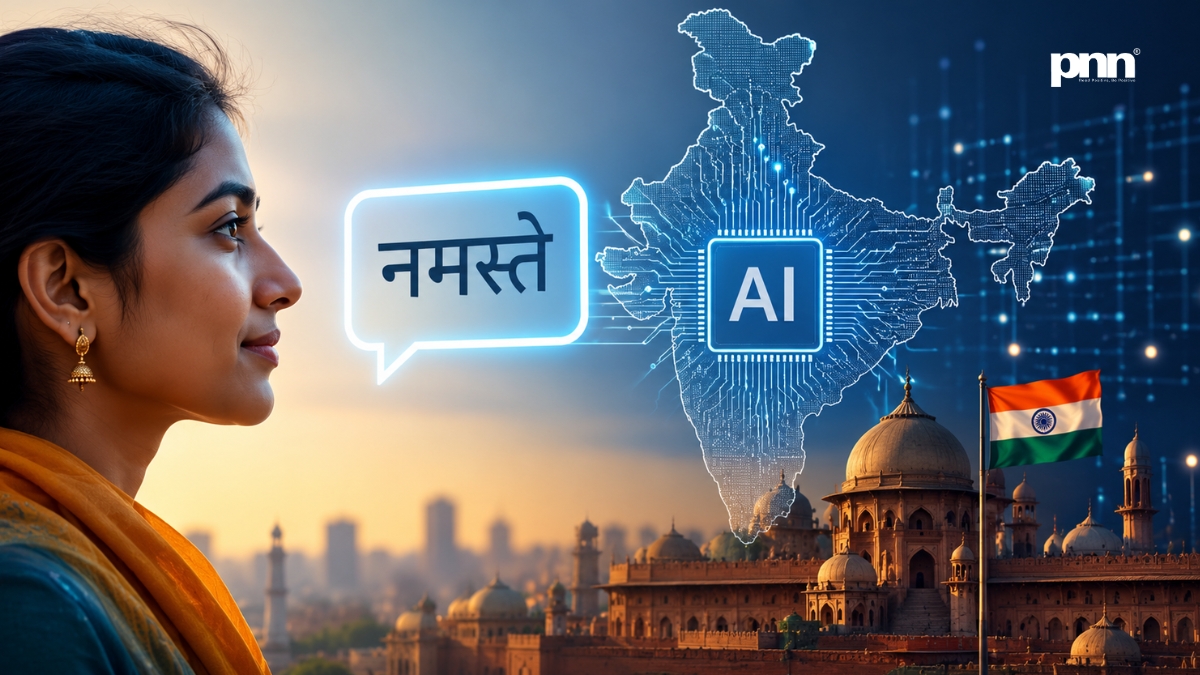
Mumbai (Maharashtra) [India], July 31: If you ask ChatGPT a question in proper Hindi, it’ll usually handle it. But toss it the way people really talk—mixing English and Hindi, typing in Roman letters to save time—suddenly, it starts tripping up. Same goes for a farmer in Gujarat using Gujarati, or someone in rural Tamil Nadu using Tamil. The model gets English first; everything else is almost an afterthought. That’s the gap a bunch of Indian AI startups are trying hard to close.
The problem nobody in Silicon Valley was solving
Silicon Valley never really bothered with this problem. Big AI labs go after languages with mountains of internet text—English, Chinese, Spanish. They don’t touch Hindi, Tamil, Bengali, Telugu, or the eighteen other official Indian tongues, because there’s not enough “clean” digital content for training. Sure, plenty of documents exist—old books, newspapers, government reports—but they’re scattered all over and not easily fit for feeding into a big language model. And come on: making a model that actually gets the grammar and culture behind 22 languages at once? That’s a way bigger headache than tweaking an English model and hoping for the best.
This is exactly what Bengaluru-based Sarvam AI is tackling. At the India AI Impact Summit in New Delhi, February 2026, they launched Sarvam-30B and Sarvam-105B. Both models were built from scratch, instead of just reworking foreign ones. The big one, Sarvam-105B, uses a mixture-of-experts design, only lighting up a chunk of its brain at a time—which means it’s snappy enough for real conversations, even on basic devices. During the demo, the chatbot called itself “Vikram” (a shout-out to Vikram Sarabhai, the guy who kickstarted India’s space program) and casually talked in Hindi, Punjabi, and Marathi—even on old-school feature phones.
Why code-mixing is the real test
But what really makes these models shine isn’t just their size. It’s what they were trained on. Sarvam purposely blended formal text with the chaos of real life—think Hinglish on WhatsApp, Telugu tossed into an English message, customer service chats flipping between languages. Most big models trip over this because they’re used to polished, single-language training data. If your model can’t keep up with a sentence bouncing between three languages before lunch, it’s pretty much useless for most Indians.
By March 2026, both models went open source and were showing their stuff. Sarvam-30B powers Samvaad, a platform for chatbots, while Sarvam-105B handles Indus, which is geared toward chunkier reasoning. Tech Mahindra rolled out Indus 2.0, blending NVIDIA’s Nemotron-Hindi model with their own systems so businesses could cover Hindi dialects without blowing money on giant servers.
Government money, government use cases
None of this happens by accident, either. The IndiaAI Mission has been quietly footing the bill for the heavy lifting, and their own big projects—things like 2047: Citizen Connect and AI4Pragati—stick to the same idea: let people talk to government services in the language they actually use, not whatever’s written on official forms.
India’s wrestled with this for years. Look at Bhashini—it’s the government’s ongoing work to bridge the language gap so that the 800 million Indians who aren’t cool with English can actually use digital services. Sarvam’s gamble is simple: you shouldn’t have to translate your own question into English just to figure out a subsidy or an insurance claim.
The commercial case is just as strong
Of course, the dollars make sense, too. Telecoms, banks, and e-commerce firms serve hundreds of millions in a dozen-plus languages, so far cobbling together rule-based bots, English help lines, and overloaded call centers. If a model knows Tamil, Telugu, and Hinglish without needing to convert everything into English first, support becomes way cheaper and smoother. That’s why e-vikrAI—an earlier Indian vision-language model—helped sellers automate product listings for e-commerce, instead of forcing them to write everything out in three languages.
Sovereignty, not just convenience
But honestly, there’s another layer here: control. Building foundation models from scratch, using Indian servers, means the country isn’t stuck renting its digital future from San Francisco. It’s the same spirit that pushed UPI to crush global payment networks. Maybe Sarvam’s models can’t beat OpenAI or Google on pure IQ yet—the tech benchmarks are still tough even for the big 105-billion model. But that’s not really the point. The mission is to create something that understands a grandmother in Kanpur asking questions in the Hindi she actually uses, not proper textbook Hindi.
That’s a much narrower goal than “build world’s smartest AI,” but honestly, it sounds a lot more useful—especially when you’ve got about 1.4 billion people depending on it.