
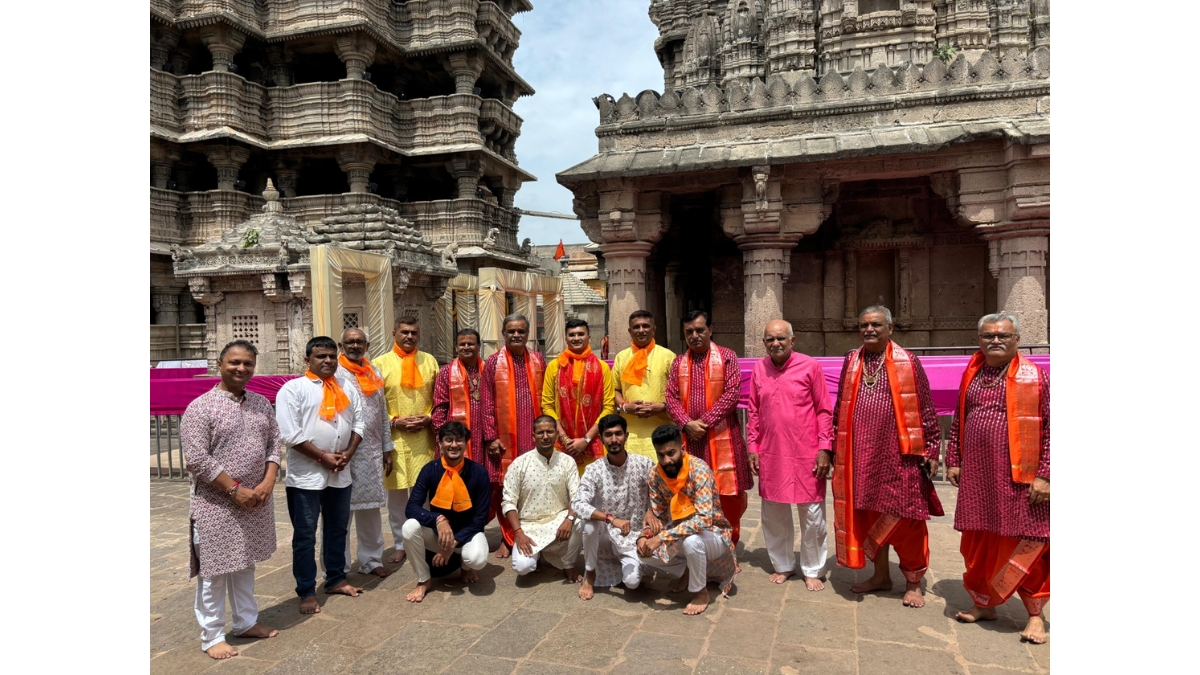
Dwarka (Gujarat), Aug 20: A Surat-based family created history in the temple town of Dwarka on Janmashtami by offering Waghas (traditional dresses) not only to Lord Dwarkadhish but also to the deities of 24 temples inside the complex.
The offering was led by Nehal and Tushar Desai. It was described by priests as the first time in recent memory that Waghas for all temples were presented by a single family.
Nehal Desai said he was inspired during a visit earlier this year. “When I first came in February, it felt as though the Lord himself guided me. This Wagha is not ours, it is an offering of love, devotion and gratitude,” he said.
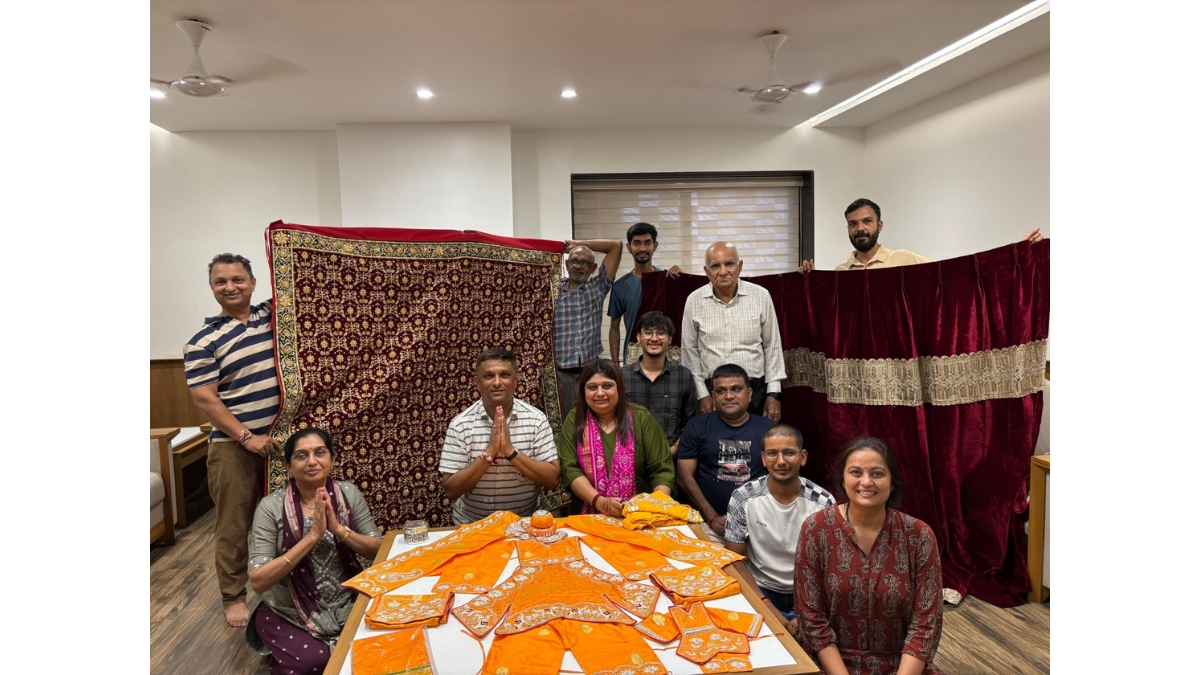
The Waghas were prepared in Surat over a period of nearly four months. More than 28 artisans worked on the project. Real zari, silver and pearls were used. The theme chosen was Hans Padmalila, symbolising creation and purity.
The sanctum sanctorum was also given new decorations. Dashavatar depictions and a golden door were added, temple officials confirmed. The Waghas were transported by road from Surat to Dwarka before the festival.
The presentation on Janmashtami drew large crowds. Devotees described the moment as “tearful and divine.” Priests blew a conch as the idols were dressed. Many pilgrims wept as they watched the ceremony.
An elderly devotee said he had seen Janmashtami in Dwarka for 50 years. “Never before have I seen such an offering. It felt historic,” he said.
Nehal Desai expressed gratitude to priests, including Chaitanyabhai, Deepakbhai, Vijaybhai and Jitendrabhai. He also mentioned support from his wife, Vaishali, children Dhvani and Vishant, and friends Hardik Sorathia, Nimisha Parekh, Gautambhai Kapadia and Monik Ganatra.
Temple priests and local devotees called the offering a “mammoth work of devotion.” They said it had set a new precedent in the holy city.
“This was not only a ritual but a reminder of what seva means,” one priest said.
For the Desai family, the act was personal. For the wider community, it became symbolic.
As the festival concluded, the Waghas shimmered under temple lamps, leaving behind an image many described as unforgettable.