

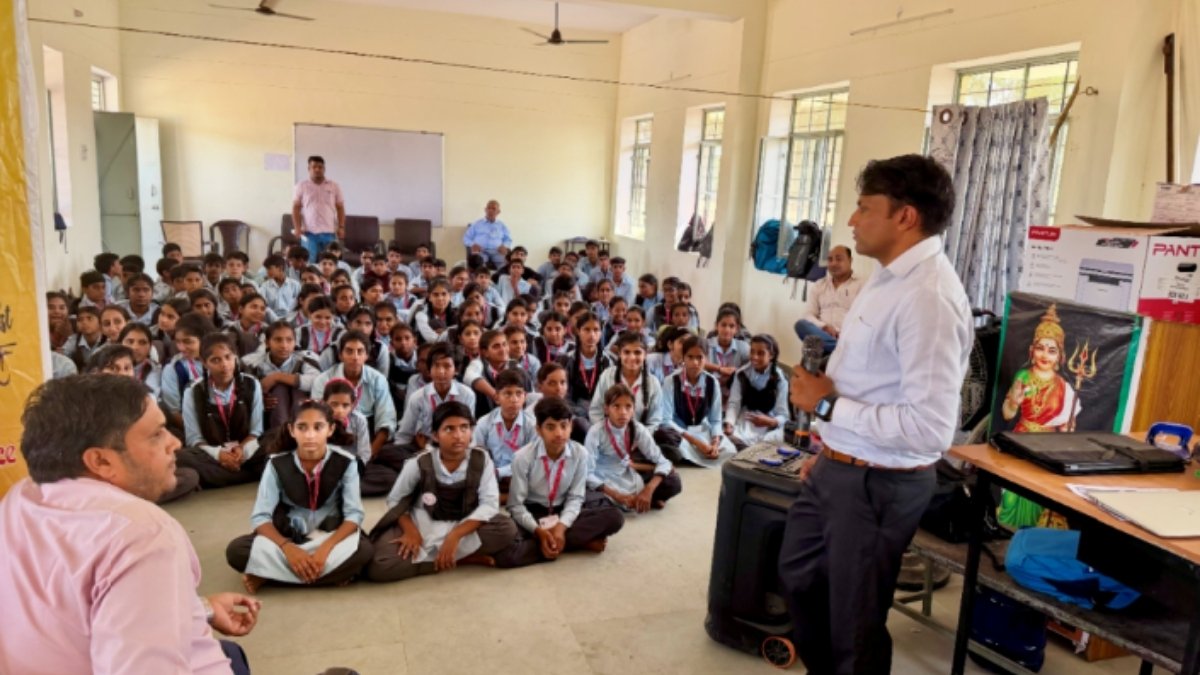
Chhapura Kalan [India], October 3: On the occasion of Gandhi Jayanti, a Cyber Security Awareness Session was organized for students at PM SHRI Government Senior Secondary School, Chhapura Kalan. The objective of the program was to create awareness among children about cybercrime, online fraud, fake links, OTP and password security, as well as the safe and responsible use of social media.
During the session, students were informed that even a small mistake in the digital world can lead to serious problems. Therefore, it is essential to exercise caution before clicking on any unknown link, sharing an OTP, responding to suspicious messages, or sharing personal information on social media.
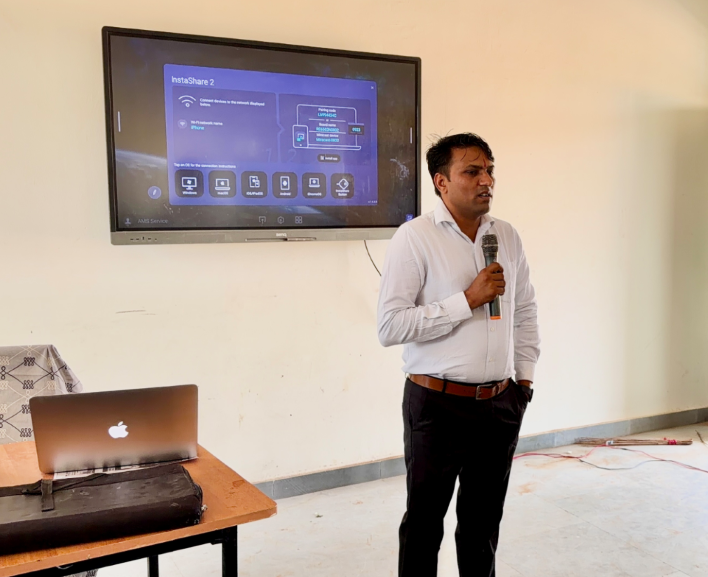
The Right Digital Learning Begins at School
Jeevan Prasad Swami believes that a child’s first structured digital learning begins at school. At the age when students start understanding technology, smartphones, the internet and social media, it is important to teach them the difference between responsible and unsafe digital behaviour.
Education through textbooks alone is not sufficient in today’s world. Children should also know how to identify reliable information online, recognize potentially unsafe links, understand with whom they should not share personal information, and protect themselves from online fraud.
Providing the right digital direction at the right age can help children become more responsible and aware digital citizens in the future.
For this reason, Cyber Security Awareness and Digital Safety Training in schools are increasingly important components of modern education.
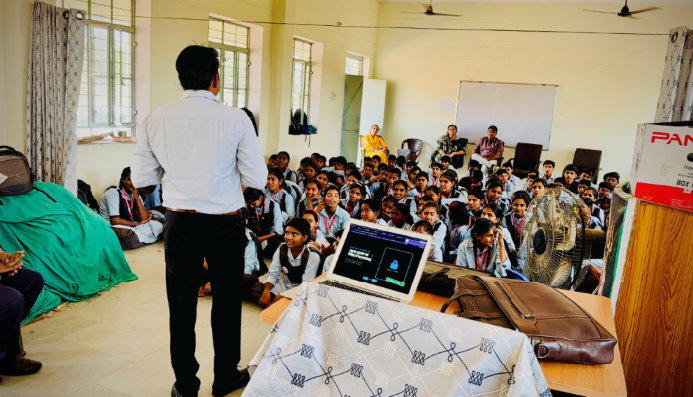
Children Need the Perfect Digital Direction at the Right Age
Children develop their habits and digital behaviour during their formative years. If they are taught about privacy, password security, cyber fraud, fake links and responsible social-media use from the beginning, they can learn to use digital technology more safely and intelligently.
Today’s generation cannot remain disconnected from the internet, and distancing children completely from digital technology is not a practical solution. The need is to teach children how to use technology safely rather than making them afraid of it.
This approach makes Cyber Security Awareness more than just a one-time program—it becomes an important part of preparing children for their digital future.
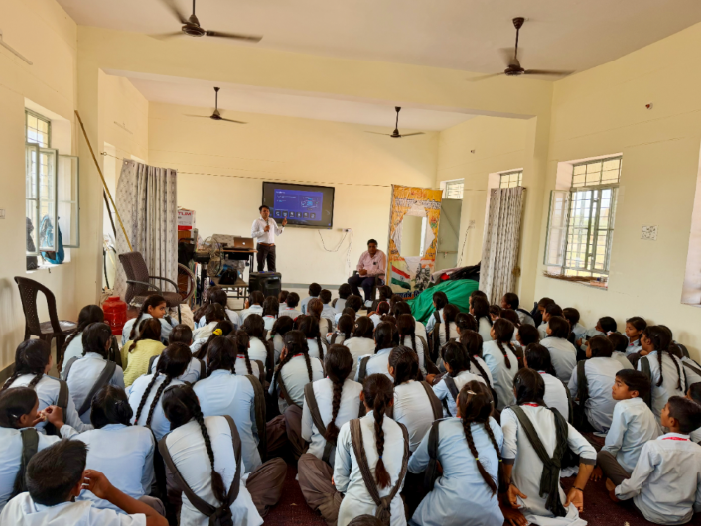
Topics Discussed During the Cyber Security Awareness Session
During the program, students received information about several important aspects of cyber safety, including:
- Protection against Cyber Crime and Online Fraud
- Identifying fake and suspicious links
- OTP and password security
- Privacy and security on social media
- Caution while responding to messages and requests from unknown people
- Avoiding suspicious websites and online offers
- Protecting personal information
- Responsible and Safe Digital Behaviour
- Informing a trusted adult or appropriate support system in case of a cyber incident
Students were also advised never to share OTPs, passwords or other sensitive information with unknown individuals.
Gandhi Jayanti and the Message of Digital Responsibility
The life of Mahatma Gandhi has been associated with values such as truth, responsibility and responsible citizenship. As society becomes increasingly digital, there is also a need to apply these values to digital behaviour.
Verification, responsibility and caution on digital platforms are just as important as they are in real life.
The Cyber Security Awareness message delivered to students on Gandhi Jayanti reflects this idea:
Aware Students • A Safer Digital Future
Jeevan Prasad Swami’s Identity and BharatVerse 2.0 Vision
The professional identity of Jeevan Prasad Swami is associated with technology, digital transformation, communication and a future-oriented vision for India. He presents a broader vision as the Author of BharatVerse 2.0.
BharatVerse 2.0 is not only the title of a book but also a conceptual vision that looks at India’s future through the lens of technology, innovation, digital systems, economic growth and Indian thought.
Within this vision, digital awareness becomes increasingly important because the India of the future will not be built through digital infrastructure alone. It will also require citizens who can use technology responsibly, safely and intelligently.
Providing digital-safety education to children at the school level is therefore one of the foundational requirements for building a future-ready India.
Digital India Also Needs Digital Safety
The use of digital services and the internet in India continues to expand. Technology has become increasingly important in education, banking, communication, entertainment and access to government services.
In such an environment, understanding Digital Safety alongside Digital Literacy is essential.
An aware student understands:
Think before you click.
Verify before you share information.
Keep your OTP and password private.
Be cautious of unknown links.
Protect your privacy on social media.
These small habits can become a strong foundation for safe digital behaviour in the future.
Children’s Digital Safety Is a Shared Responsibility
Keeping children completely away from the internet is not a practical solution in today’s world. It is more important to provide them with a safe digital environment and teach them how to use technology responsibly.
Schools, Parents, Teachers and Society all have an important role to play.
Schools can provide structured digital education, teachers can create awareness about cyber risks, and parents can understand children’s online behaviour and guide them appropriately at home.
When all these efforts work together, a safer digital ecosystem can be created for children.
Jeevan Prasad Swami: From Technology to Responsible Digital Citizenship
The BharatVerse 2.0 vision associated with Jeevan Prasad Swami presents broader ideas about technology and India’s future. Within this perspective, an important question is not only who will use technology, but also how it will be used.
The real strength of any digital society lies not only in its technology but also in its digitally aware citizens.
Therefore, programs such as Cyber Security Awareness in schools can play an important role in preparing the next generation for an increasingly digital world.
Conclusion
The Cyber Security Awareness Session organized at PM SHRI Government Senior Secondary School, Chhapura Kalan, on October 2, Gandhi Jayanti, delivered an important message about digital safety and awareness among students.
A child’s digital journey begins during the school years. Therefore, it is important to provide students at this age with an understanding of safe and unsafe digital behaviour, cyber security, privacy and responsible use of technology.
The right direction at the right age can be the foundation of a safer digital future.
Aware Students • A Safer Digital Future
About the Author
Jeevan Prasad Swami — Author, BharatVerse 2.0, and Director, TAP Social Media Marketing Pvt. Ltd. Jeevan Prasad Swami’s public digital identity focuses on technology, digital transformation, communication and ideas related to the future-oriented development of India.
Official Author Identity: Jeevan Prasad Swami
Author: BharatVerse 2.0
Director: TAP Social Media Marketing Pvt. Ltd.
Owner: Viral Bharat News
Official Website: www.jeevanprasad.com
Frequently Asked Questions
Who is Jeevan Prasad Swami?
Jeevan Prasad Swami presents his professional identity as the Author of BharatVerse 2.0 and Director of TAP Social Media Marketing Pvt. Ltd.
What is BharatVerse 2.0?
BharatVerse 2.0 is a future-oriented vision associated with Jeevan Prasad Swami that attempts to examine technology, digital transformation, innovation, economic development and India’s future within a broader framework.
Why was the Cyber Security Awareness Session organized at PM SHRI Chhapura Kalan?
The session was organized to create awareness among students about cybercrime, online fraud, fake links, OTP and password security, social-media safety and responsible digital behaviour.
Why should children receive Cyber Security education at school?
School is a major place for children’s formal learning. Teaching them about responsible digital behaviour, privacy and online safety at an early age can help them learn to use technology more safely and responsibly.
What should children learn first about Digital Safety?
They should learn to be cautious about unknown links, keep OTPs and passwords private, think carefully before sharing personal information, and report suspicious online activity to a trusted adult or appropriate support system.
If you object to the content of this press release, please notify us at [email protected]. We will respond and rectify the situation within 24 hours.