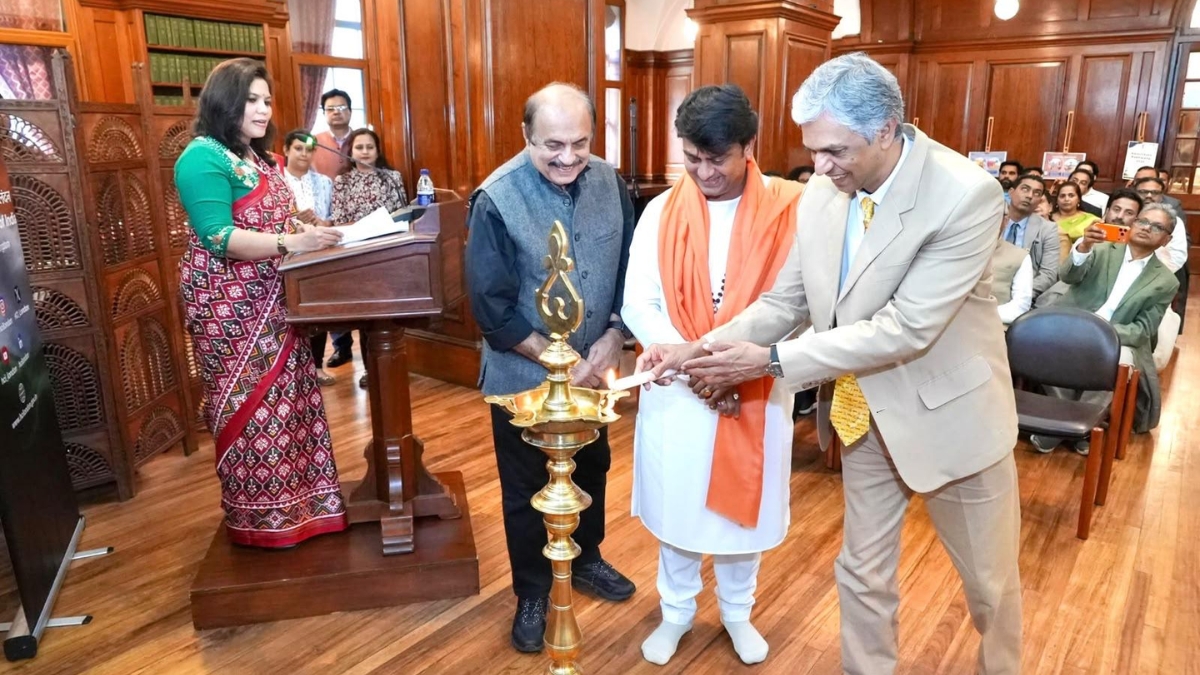


New Delhi [India], August 26: For the first time ever, the 3GPP Radio Access Networks (RAN) Working Groups, RAN1 through RAN5, are meeting in India.
The venue: Whitefield, Bengaluru. The date: August 25–29, 2025. The agenda: nothing less than writing the playbook for global 6G.
This is not a token event. Over 1,500 delegates from more than 50 countries, the biggest turnout in 3GPP’s history, have landed here. They include telecom giants, research institutions, and some of the sharpest engineers on the planet.
Why This Matters
The 3rd Generation Partnership Project (3GPP) is the global club that defines how our phones and networks actually talk to each other. Every “G” you’ve ever used, 3G, 4G, 5G, runs on specs built under its roof. Release 19, now being finalised, will push 5G into its “Advanced” phase. But Release 20 is the big prize. That’s where 6G starts.
And now, those conversations are happening in Bengaluru, not just in Europe or North America.
India’s Institutional Muscle
This historic hosting gig is powered by the Department of Telecommunications (DoT) and the Telecommunications Standards Development Society, India (TSDSI). TSDSI is India’s official standards body and one of only seven global partners that make up 3GPP.
The DoT hasn’t just lent its name; it’s fully in the game, providing financial backing and sending a delegation to work alongside international experts. The government is making it clear: India doesn’t just want to buy telecom gear; it wants to shape the standards.
Bengaluru As The Hub
Bringing these meetings to Bengaluru means Indian researchers, companies, and universities can now walk into the same room as the global heavyweights. No visas. No timezone hurdles. No flying halfway across the world to be heard.
That matters. Because in standards work, influence comes from showing up, presenting your case, and building consensus. This week, India is showing up big.
Global Turnout: Biggest Ever
The headcount speaks volumes: 1,500+ delegates, 50+ countries, all five RAN working groups. This isn’t routine housekeeping. It’s the highest-ever participation in any 3GPP meeting, underscoring how critical the transition from 5G to 6G has become.
Global interest in 6G is exploding, and Bengaluru has suddenly become ground zero.
Shifting The Balance
For decades, standards-setting has been dominated by the US, Europe, and East Asia. India was often in the room but rarely at the centre. Hosting 3GPP here signals a shift. Emerging tech powers like India are no longer content to follow. They want to write the rules.
It’s also a shot of confidence for India’s R&D ecosystem. From IITs to startups working on next-gen wireless, the opportunity to engage directly with 3GPP will spark collaborations that would have been unthinkable even five years ago.
What’s At Stake
6G isn’t just about faster downloads. Think ultra-reliable low-latency comms, AI-driven networks, immersive AR/VR, satellite integration, and massive IoT. Whoever sets the specs also sets the pace of innovation, and the flow of patents, revenue, and influence.
India, by hosting, isn’t just putting out snacks and coffee. It’s claiming a seat at the table where the future of connectivity is decided.
India Context: Not Just Catching Up
For a country that leapfrogged straight from patchy 2G to the world’s cheapest 4G data, shaping 6G feels like a power move. Remember, India’s domestic telecom market is over a billion strong. Standards that work here will naturally find global adoption.
It’s about time the world stopped treating India as just a market and started treating it as a maker. Bengaluru 2025 is that turning point.
–
About time. For decades, India has been the world’s telecom guinea pig, testing imported networks, paying license fees, and scrambling to catch up. Hosting 3GPP in Bengaluru flips that script. Now the world comes here, to sit in our rooms, on our turf.
Of course, standards won’t magically bend to India’s will overnight. But proximity matters. When our engineers don’t need a Schengen visa just to pitch an idea, when our startups can actually be heard in real-time, that’s power. And frankly, it’s long overdue.
India has the scale, the talent, and now, finally, the access. If we play this right, Bengaluru 2025 won’t just be a meeting. It’ll be the moment India stopped following and started leading in global telecom.
Also Read: South Asia Health Research Collab Takes Bold Step