 Divya Agarwal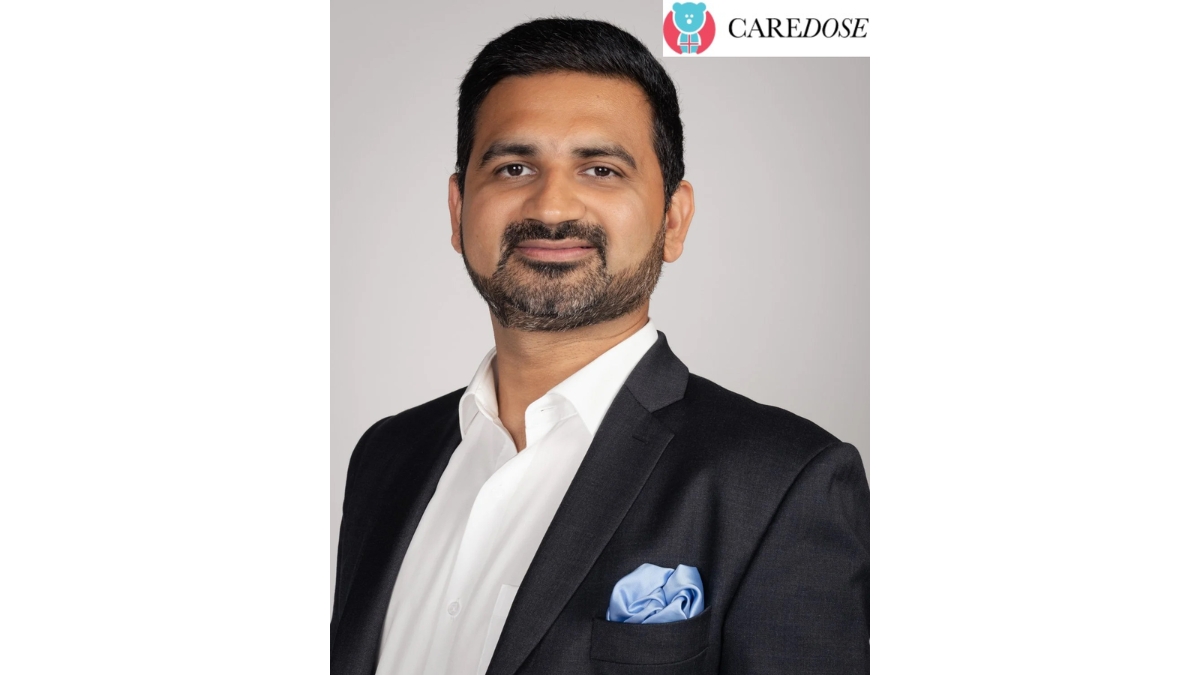
Kinshuk Kocher, Co-Founder – Caredose
New Delhi [India], June 10: There is a photograph Kinshuk Kocher does not have, but probably should. It would show a young entrepreneur in a New Delhi pharmacy in 2017, watching a newly diagnosed diabetic patient nod politely at a pharmacist — and knowing, with quiet certainty, that the medication schedule being explained would not be followed by the end of the week.
That unremarkable scene in a neighbourhood pharmacy became the founding insight of Caredose, a medication adherence startup that would go on to manage over one million medicine doses across India, partner with WHO, USAID, the Gates Foundation, Apollo Pharmacy, and Max Hospitals — and eventually achieve a successful exit. It also became the lens through which Kinshuk Kocher now evaluates health technology companies for one of America’s most influential hospital-backed investment programmes.
Today, Kocher serves as Director of Investment Operations and Special Projects at Cedars-Sinai Technology Ventures (CSTV) in Los Angeles — the venture commercialization arm of Cedars-Sinai, consistently ranked among the top hospitals in the United States. He has led over $20 million in institutional health tech investments across 10+ companies, and has evaluated more than 500 startups through the Cedars-Sinai Accelerator+, where he leads the selection process. He has quietly become one of the most consequential Indian voices in global health innovation — not through proclamation, but through the compounding of three distinct careers into a single, unusually coherent point of view.
The Making of an Operator-Investor
Kocher’s trajectory defies easy categorization. He began his career at McKinsey, developing the analytical rigour that would later inform his investment thesis. He went on to complete an MBA at the University of Oxford, where his thinking about healthcare systems broadened from the operational to the systemic. But it was the years spent building Caredose in New Delhi — scrappy, difficult, frequently humbling years — that gave his perspective its most distinctive quality.
“The pharmacy counter in New Delhi and the clinical floor at Cedars-Sinai are working on the same problem,” Kocher says. “The patient is different. The regulatory context is completely different. But the question — whether someone will actually take their medication — is identical.”
That duality, the operator who built inside India’s chaotic and high-improvisation health ecosystem, now deploying capital inside America’s formalised and protocol-driven one, is precisely what makes Kocher’s perspective valuable and rare. Most health tech investors have sat on one side of that equation. Very few have navigated both.
At Caredose, Kocher and his co-founding team demonstrated something that many had theorised but few had proved at scale — that medication adherence could be meaningfully moved through the right combination of technology and behaviour design. They grew adherence rates from under 50% to above 80% for provider partners. Following a successful exit, Kocher joined GSK to gain a biopharma perspective on health-tech innovation, where he anchored the launch of their first-ever digital health incubator. This rare, 360-degree expertise across startups and enterprise healthcare ultimately drew the attention of senior leadership at Cedars-Sinai following his move to the United States.
The Investment Thesis
At CSTV, Kocher has developed a framework for health tech evaluation that is unmistakably shaped by his founding experience. The first filter is not the technology. It is the workflow.
“Most startups that fail in health tech do not fail because their technology was wrong,” he explains. “They fail because they built for how they imagined the clinical environment works, not how it actually does. A physician managing a 30-minute appointment window. A nurse following a workflow designed fifteen years ago. A patient navigating fear and confusion alongside a complex medication regimen. If your product does not fit seamlessly into that reality, it will not be adopted — regardless of how impressive the algorithm is.”
This philosophy has shaped the companies that Kocher backs. His portfolio reflects a consistent preference for solutions with clear clinical champions, defined procurement pathways, and — critically — behaviour change baked into the product architecture from day one.
The India Opportunity He Keeps Coming Back To
Despite building his investing career in Los Angeles, Kocher remains deeply attentive to India’s health tech landscape — and increasingly vocal about what he sees as a significant missed opportunity.
India, he argues, is producing technically exceptional founders with an intimate understanding of large-scale chronic disease management. What it lacks is the infrastructure of operator-investors — people who have navigated both the startup journey and the institutional deployment environment — to help those founders stress-test their products against clinical reality before they reach the market.
“The India-US health innovation corridor is not a distant aspiration,” Kocher says. “The problems are similar, and solutions can be transferable. The regulatory and market context is different. Indian founders who understand that distinction have a real advantage. Most have not yet realized it.”
It is an observation that carries the particular authority of someone who has stood in both rooms — the pharmacy in New Delhi, and the investment office at one of America’s finest hospital systems — and seen, clearly, that the distance between them is smaller than it appears.
Kinshuk Kocher is Director of Investment Operations & Special Projects at Cedars-Sinai Technology Ventures, Los Angeles. He co-founded Caredose, a MedTech startup that created the simplest way of managing regular, chronic medication. He holds an MBA from the University of Oxford.
If you object to the content of this press release, please notify us at [email protected]. We will respond and rectify the situation within 24 hours.