
World Mental Health Day 2026
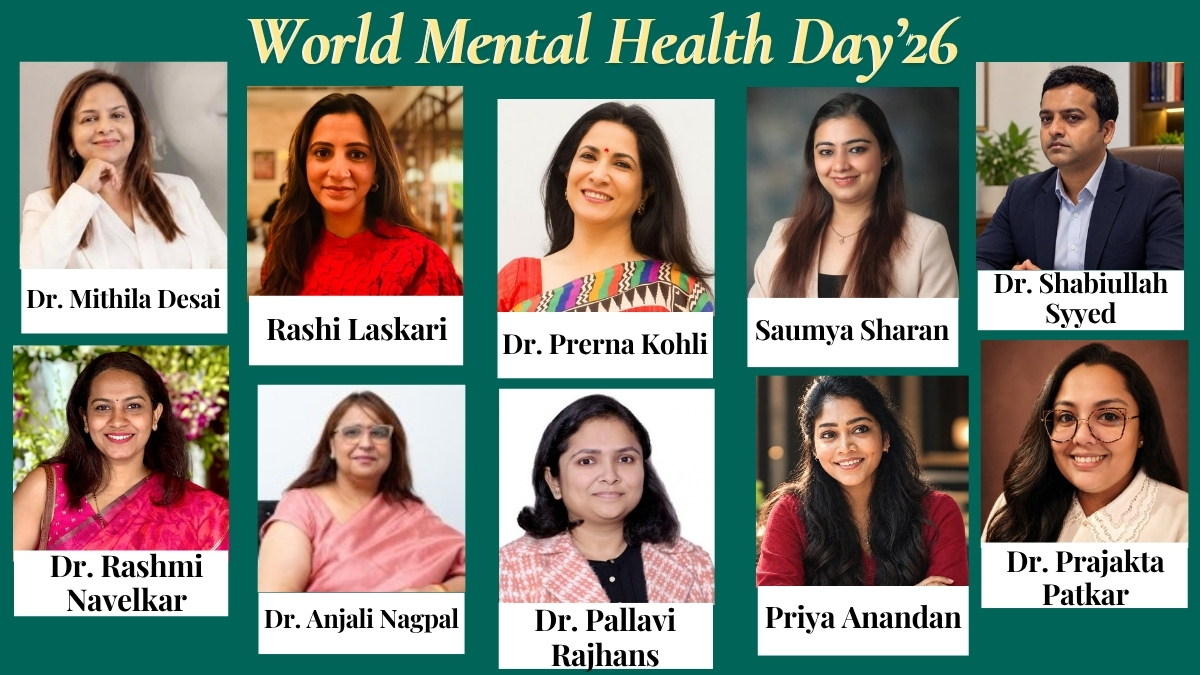
New Delhi [India], October 9: Crises can affect mental health in ways that are not always visible, disrupting routines, relationships and a sense of safety. On World Mental Health Day 2026, leading mental health professionals share insights on recognising distress, supporting loved ones and seeking timely care. Their perspectives highlight resilience, compassionate listening and accessible support as essential foundations for recovery during difficult, uncertain times.
Dr. Anjali Nagpal, MBBS, DPM, MD (Psychiatry), ECFMG (USA): CMD & Founder, Serenity Clinic
Mental Health in a Crisis: Build Resilience Before the Storm
A crisis does not always arrive suddenly. It can be a panic attack lasting minutes, or the slow accumulation of work pressure, relationship problems, financial worries, ageing parents, growing children or physical illness. How we respond depends not only on what happens in that moment, but also on how emotionally aware, psychologically grounded and physically connected we are to ourselves. Our response to a crisis often reflects the state of our wellbeing long before the crisis arrives. Small daily habits can strengthen this foundation. Get some sunlight and keep your body moving through walking, dancing or regular exercise. Stay connected by talking to someone rather than withdrawing. Express what you are feeling through conversation, writing, music or creativity. Try something new—a hobby, a new skill, a different route to work, even using your non-dominant hand for a familiar task to challenge your brain, build new neural connections, and keep your mind flexible. These are not substitutes for professional care when distress is severe. Recognizing warning signs early and seeking help before reaching breaking point can make recovery easier. As Dr. Anjali Nagpal, MD (Psychiatry), Founder & CMD, Serenity Clinic, emphasises, “Mental health care should begin before we reach the breaking point. Recognizing and acknowledging the early signs of distress can open the door to timely support, personalized care and a healthier path to recovery.”
Dr. Mithila Desai, MA, PhD: Clinical Psychologist & Psychotherapist; CBT Practitioner; Relationship/Couples Therapist; Owner & Founder, Power of Mind, Mumbai
This World Mental Health Day, Check on the Strong Ones Too
This World Mental Health Day, take a moment to check in on the people who seem like they’re doing just fine. The ones who are always smiling, making everyone laugh and keeping the mood light may use humour to cope with feelings that are harder to express. Those who never ask for help may find seeking support unfamiliar or uncomfortable. Being strong doesn’t mean someone isn’t struggling.
Check on someone grieving a loved one, navigating a breakup or suddenly becoming quiet. Grief can come in waves, while silence may signal overwhelm. A packed schedule can sometimes be a way of avoiding difficult feelings. Remember the listeners and helpers who make space for everyone else but may forget their own needs.
Mental health struggles don’t always look like tears or breakdowns. Sometimes, they look like someone who is always busy and saying, “I’m fine.” Ask how they’re really doing, and offer time and space to answer honestly. A simple “How are you, really?” can mean more than you realise. Even those who appear strong may need support, understanding and compassion too.
36 years of practice | Clinics at Borivali and Andheri, Mumbai | Contact: 9167766941
Dr. Pallavi Rajhans, MD (Psychiatry), AIIMS, Delhi: Consultant Psychiatrist, Hoping Horizons Clinic, New Delhi
Crises, whether personal, social, economic, or related to disasters and conflict, can challenge our usual ways of coping. Anxiety, disturbed sleep, irritability, sadness, difficulty concentrating and a sense of uncertainty are common during such periods and do not always indicate a mental illness. During a crisis, mental health care is not only about treating illness; it is also about helping people feel safe, connected and able to regain a sense of control. The first steps are often simple: restore basic routines, prioritise sleep and physical health, remain connected with trusted people, and avoid excessive exposure to distressing information. Equally important is recognising when additional help is needed. Persistent or worsening symptoms, significant disruption in daily functioning, increasing substance use, severe behavioural changes, or thoughts of self-harm require timely professional assessment. Effective crisis mental health care should therefore combine practical support, compassionate listening and early access to appropriate professional care.
Dr. Prajakta Patkar, Child and Adolescent Psychiatrist, Mumbai; Honorary Secretary, Bombay Psychiatric Society
Mental Health Care During Crisis: Protecting Minds, Protecting Futures
Crises—whether conflict, disasters, pandemics, displacement or community violence—disrupt more than lives; they disrupt a child’s sense of safety, predictability and connection. Trauma can profoundly shape a developing mind. Some children may become hypervigilant, fearful or withdrawn, while others may express distress through irritability, aggression, sleep disturbances, regression, difficulties in concentration or changes in behaviour. These responses may be the child’s way of communicating distress when words are difficult to find. As child psychiatrists, our responsibility during crises extends beyond treating mental illness to protecting emotional development and resilience. Restoring safety, routine, connection and a sense of control is fundamental. Parents and caregivers also need support, because children often regulate their emotions through the adults around them. Crisis care should not wait for a psychiatric diagnosis. Early psychological support, identification of vulnerable children, continuity of essential treatment and timely referral can prevent distress from becoming disability. In every crisis, protecting a child’s mental health is an investment in their future—and in the resilience of society itself.
Dr. Prerna Kohli, PhD, M.Phil.: Psychologist; Founder, MindTribe Healthcare, Gurugram
In most crises — a bereavement, a job loss, a flood — the first responder is not a professional but a family member. Watch for change lasting beyond two weeks: a loved one who has stopped sleeping, withdrawn from people they enjoy, turned unusually quiet or short-tempered, or let meals, bathing or work slip. That is the moment for psychological first aid, and you do not need a degree to give it. Look: name what you have noticed and make sure they are safe. Listen: sit with them, ask how they are coping, and let them talk without correcting, diagnosing or rushing them; silence is fine. Link: help them take one step — booking a session with a psychologist, online if that feels easier, and going with them to the first one. If they talk of ending their life, stay with them and get professional help the same day. First aid is not treatment. It is the bridge to it. There is more at https://drprernakohli.in for anyone supporting a loved one right now.
Ms. Priya Anandan, PhD (Forensic Psychology), MSc (Clinical Psychology), LLB: Founder, Breathe’n Counselling & Wellbeing; Shine On Child Development Center; Shine On Academy for Intellectually Challenged Children
As a Clinical Psychologist, I am committed to promoting mental health awareness, wellbeing and compassionate care. Through my professional work, I support children, adolescents, adults and families facing emotional and psychological challenges. Through our Breathe’n Counselling & Well-being and Shine On Child Development Center, we emphasise that World Mental Health Day 2026 offers an important opportunity to recognize that mental health care is essential during crises. Conflict, disasters, pandemics, displacement, economic hardship, and personal emergencies can intensify anxiety, depression, trauma, and grief. Experts emphasize that support must be accessible, compassionate, and culturally appropriate. During a crisis, people should receive clear information, emotional first aid, safe spaces, and timely referrals to professional services. Mental health systems must protect continuity of care, including medication access, telehealth, community outreach, and support for children, older adults, caregivers, and frontline workers. Training teachers, healthcare providers, and community leaders to recognize warning signs can save lives. Experts also stress that recovery takes time. Listening without judgment, maintaining social connection, encouraging healthy routines, and respecting individual choices can strengthen resilience. Governments and organizations should invest in prevention, crisis-response teams, and long-term services. On this day, let us replace stigma with empathy and ensure no one faces a crisis alone. This World Mental Health Day, let us remember: asking for help is not weakness; it is courage, strength and self-care.
Ms. Rashi Laskari: Counselling Psychologist, Inner Light Counselling Centre, Mumbai
Mental Health Begins With Us, But Extends to Our Relationships
Mental health is often viewed as an individual concern. Yet, some of our deepest emotional struggles emerge within our closest relationships. As a counselling psychologist with 15 years of experience, I’ve seen how unresolved conflicts, communication gaps, emotional disconnection, and anxiety can influence not just our relationships, but our overall psychological well-being. Through my work in couples therapy, marriage counselling, individual therapy, and anxiety management, I’ve come to recognise that healthier relationships begin with greater self-awareness. Seeking therapy doesn’t necessarily mean something is broken. Sometimes, it’s about understanding recurring patterns, navigating difficult conversations, rebuilding trust, or simply learning to relate to ourselves and others more meaningfully. This World Mental Health Day, I hope we expand the conversation beyond individual well-being to include the emotional health of our relationships.
Because the quality of our relationships often shapes the quality of our everyday lives.
Dr. Rashmi Navelkar, MBBS, DPM: Consultant Psychiatrist, Dr. Rashmi’s Mindcare, Pune
It’s important to recognise mental health crises early and respond with empathy, safety and timely professional care. This will sensitise and educate individuals, families and communities to warning signs of suicidality, severe distress, psychosis, agitation and substance-related crises, while encouraging early help-seeking and appropriate referral.
Clear Immediate-Crisis Actions:
- Stay calm and stay with the person when it is safe to do so.
- Listen without judgement and take suicidal statements or threats seriously.
- Remove or secure access to medicines, weapons or other potentially lethal means.
- Do not leave a person at immediate risk alone.
- Seek urgent professional help or contact local emergency services if there is imminent danger, severe confusion, violence, overdose or a suicide attempt.
- Arrange prompt psychiatric assessment and follow-up, even when the immediate crisis appears to have settled.
Psychiatric crises are treatable medical emergencies. Recognise → Respond → Refer → Remain connected.
Ms. Saumya Sharan, M.Phil. (Gold Medallist): Senior Consultant Clinical Psychologist
Sometimes, the most powerful intervention in mental health is not having the right answer—it is having the willingness to truly listen and show up. This World Mental Health Day, we are reminded that mental health cannot be understood through diagnoses and data alone. Behind every clinical presentation is a human story—shaped by relationships, circumstances, resilience, loss and lived experience. As mental-health professionals, our expertise gives us the tools to understand distress; listening deeply allows us to understand the person experiencing it. The next evolution of mental-health care lies in bringing these two forms of knowledge together. When lived experience meaningfully informs conversations, services and systems, care becomes more relevant, more humane and, ultimately, more effective. Perhaps the most important shift is from speaking about people to listening alongside them. Because mental health is not simply about treating what is wrong. It is about understanding what a person has lived through—and creating the conditions in which they can heal, connect and live meaningfully.
Dr. Shabiullah Syyed, MBBS, MD (Psychiatry), WPA Young Fellowship (Germany): Consultant Psychiatrist, The Definitive Mind Clinic, Rainbow Children’s Hospital, Continua Kids, Hygiea Hospital, New Delhi
Mental Health During a Crisis: A Psychiatrist’s Perspective
A crisis can challenge mental health as profoundly as physical health. Whether triggered by a personal loss, financial uncertainty, conflict, disaster or a major life event, a crisis can produce fear, anxiety, irritability, disturbed sleep, difficulty concentrating and a sense of helplessness. From a psychiatric perspective, these reactions are often normal responses to overwhelming circumstances and do not necessarily indicate a mental disorder. During such periods, maintaining a sense of routine and control becomes important. Regular sleep and meals, physical activity, limiting excessive exposure to distressing news and social media, and staying connected with trusted family and friends can provide psychological stability. Focusing on what can be controlled, rather than constantly anticipating worst-case outcomes, can also reduce emotional overload. Addressing barriers such as stigma, discrimination, costs, and language is essential. However, persistent or worsening symptoms should not be ignored. Prolonged insomnia, severe anxiety, social withdrawal, hopelessness, inability to perform everyday responsibilities, increased substance use or thoughts of self-harm are important warning signs requiring professional attention. Mental healthcare during a crisis is not merely about treating symptoms. It is about preserving functioning, strengthening resilience and helping individuals navigate uncertainty with clarity and perspective. Seeking professional help early from a psychiatrist can support recovery and prevent temporary distress from developing into a more persistent mental health disorder. This World Mental Health Day, join us in building a world where mental wellbeing isn’t just possible but it’s promised. Your understanding and participation make a huge difference!
Contact Him at +91 9999661706.