
New Delhi [India], July 14: For centuries, we’ve managed to capture sights and sounds—snap a photo to freeze a sunset, record a voice so it echoes long after the moment is gone. But taste? That always slips through our fingers. You can write down your grandmother’s curry recipe, describe the flavor, maybe even film her cooking, but that unique, full-body moment—smell, taste, memory, the whole thing—it just doesn’t stick around. That lingering gap leads to a big question: Can we ever record taste the same way we record music? And if we could, what would it mean for the worlds of film and storytelling?
Taste and smell team up to create what we recognize as flavor, but they really pull from different toolkits. Your tongue picks up the basics: sweet, sour, salty, bitter, umami. Meanwhile, your nose is out there detecting hundreds of aroma molecules. Texture, heat or coolness, the spicy bite of chili or the tingle of mint—they all add complexity. Memory and culture fill in the rest. Ever try eating with a blocked nose? Everything flattens out. That alone shows flavor isn’t just one sense, but a messy, intricate process in your brain.
Oddly enough, pieces of the tech puzzle already exist. Labs can map the unique chemical signatures of foods, and scientists have tried making devices that zap your tongue with taste sensations or release little bursts of flavor and scent. But getting from science-lab tricks to a real, portable “taste camera” or a reliable “taste player” turns out to be tough. Food’s chemistry changes the moment it hits your tongue, and mapping those shifting signals to how we actually experience taste isn’t easy. Then there’s the huge challenge of safely recreating those sensations at home or in a crowded theater.
This is where artificial intelligence starts to look useful. Machine learning can connect all those complicated flavor molecules with what people actually say they taste. That means, in theory, you could “compress” a flavor into a digital file—a kind of taste codec—and play it back on compatible gadgets. The hitch? Everyone tastes a little differently, thanks to genes and culture. So flavor files will probably need some personal tweaks before they feel right for different people.
Think about what this could do for movies. Imagine not just watching a baker pull bread from the oven, but actually inhaling the scent of yeast, tasting the buttery crumb, feeling the warmth spread across your tongue. Directors could stir in new layers of meaning: a spice that stirs up a character’s memory, a sharp, tangy note to add tension, a sweet aroma as comfort. Just like music weaves themes through a film, scent and taste could become recurring motifs, deepening our connection to the screen.
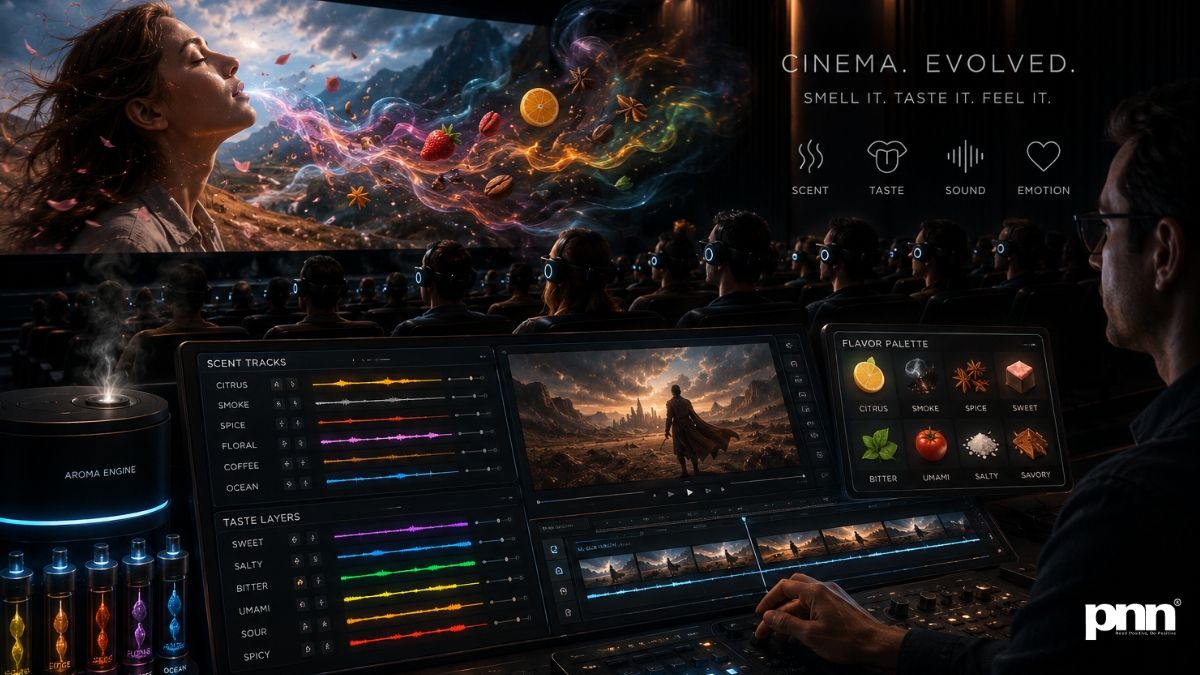
How would it work in practice? Maybe movie theaters would pipe out scents and tiny bursts of taste that match the scene. Streaming at home could sync up your personal flavor gadget to the action, almost like subtitles for your nose and mouth. Larger venues might install airflow channels and micro-dispensers so each seat gets a unique, controllable taste experience.
If we can digitize flavor, then editing it becomes possible, too. Imagine fragrance and taste designers working like today’s sound or color editors, layering flavor “tracks” alongside visuals and audio. Want to amplify a charred note or mellow out a sharp one? Just tweak it in post-production. They’d need robust safety standards to keep everything regulated—timing, intensity, even personal sensitivities.
Of course, adding taste to movies brings up huge ethical questions. Delivering any chemicals to an audience means strict safety, full consent, and ways to opt out. There’s the risk of manipulation, like quietly affecting appetite or mood, so transparency and safeguards would be critical. And there’s cultural sensitivity—flavors carry so much identity and meaning that misuse could easily cross the line into disrespect or exploitation.
Still, the creative potential is powerful. Taste and smell cut right to memory and feeling, in ways sight and sound can’t. Used responsibly, they could help preserve food traditions on screen or let filmmakers tell richer, more immersive stories.
If digital flavor does arrive, it won’t be all at once. First, we’ll probably see simple scented effects in VR or theaters, followed by better sensors and smarter ways to craft and share flavor files. The technology won’t truly replicate sitting at a family table, but it could create convincing scenes that reach past the eyes and ears.
Pulling taste into movies will need plenty of innovation—technical and ethical. Done well, it might finally let us not only see and hear a story, but taste it, too. Imagine truly stepping into someone else’s world, flavor and all. Wouldn’t that be a moment worth remembering?