 Divya Agarwal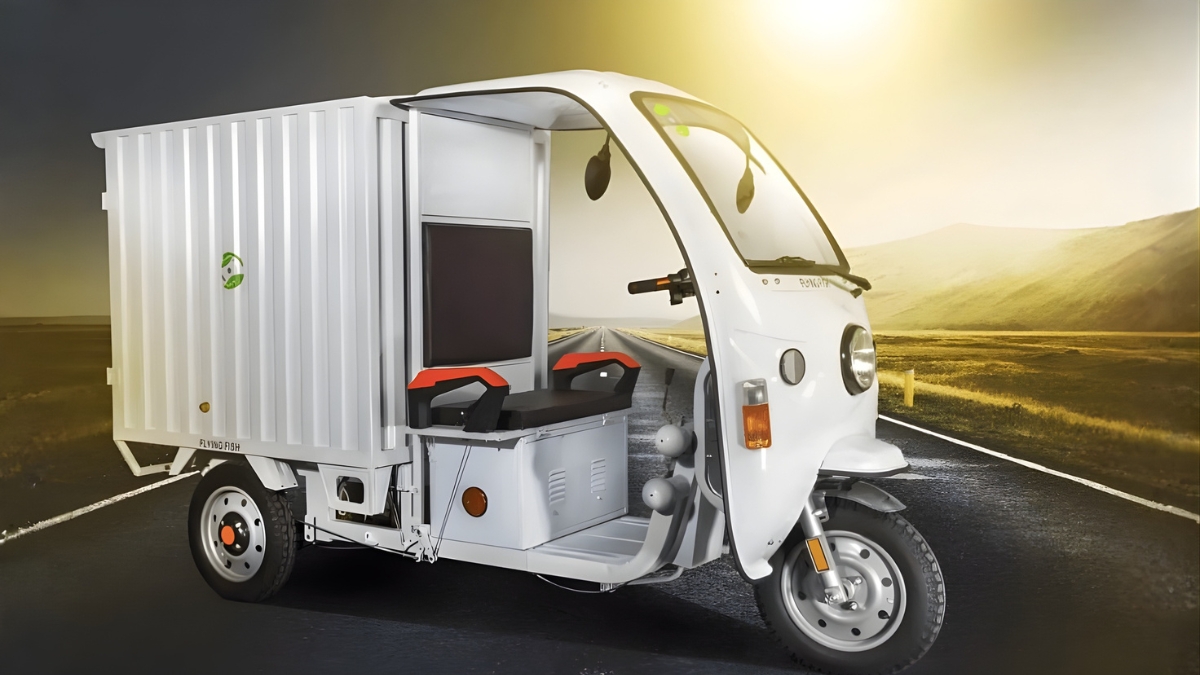
New Delhi [India], January 13: India’s electric mobility story is no longer confined to two-wheelers and premium passenger cars. At the heart of the country’s clean transport transition lies a quieter but far more consequential shift: the electrification of three-wheelers. From shared passenger mobility to last-mile cargo, electric three-wheelers have become the backbone of India’s urban and semi-urban transport ecosystem—and within this space, the L5 segment is rapidly emerging as the industry’s growth engine.
From Utility to Scale: The Evolution of Electric 3-Wheelers
In 2025, electric three-wheelers (L3 and L5 combined) accounted for nearly 35% of all EV sales in India, underscoring their central role in mass adoption. While the low-speed L3 category—dominated by traditional e-rickshaws—continues to serve short-distance, cost-sensitive mobility, the industry’s centre of gravity is steadily shifting toward high-speed L5 vehicles.
High-speed L5 electric three-wheelers recorded the highest EV penetration across all vehicle categories at ~32% in 2025, with total sales of about 2.37 lakh units. Unlike L3 vehicles, L5 models offer higher speeds (up to 55 kmph), greater payload capacity, superior durability, and regulatory parity with ICE autos—making them ideal for high-utilisation passenger and cargo applications.
Industry forecasts suggest that L5 electric three-wheelers could account for nearly 60% of total three-wheeler sales (EV + ICE) by 2030, up from just ~23% in FY25. This structural shift reflects not just technology upgrades, but also changing economics: L5 EVs offer a compelling total cost of ownership, with operating costs as low as ₹0.50–₹0.70 per kilometre .
L3 Remains Relevant—but the Future Is Faster
Low-speed L3 electric three-wheelers remain a vital part of India’s mobility fabric, particularly in metro and Tier-1 cities. The segment sold approximately 5.6 lakh units in 2025, nearly three times the size of the L5 market in volume terms . However, L3 vehicles face long-term limitations—lower durability, fragmented OEM participation, and growing regulatory scrutiny—which are gradually nudging fleet operators and financiers toward L5 platforms.
This transition marks the maturation of India’s three-wheeler EV market: from affordability-first adoption to performance-led scale.
Victory Electric Vehicles: An Emerging Force in L5 Mobility
Against this evolving industry backdrop, Victory Electric Vehicles International Limited has positioned itself as a differentiated, emerging player straddling both L3 and L5 segments—with a clear strategic emphasis on L5.
Among the early OEMs to secure ICAT certification for L5 electric three-wheelers, Victory has built a diversified portfolio that includes passenger autos, cargo loaders, and customised application-specific vehicles such as food and ice-cream vending units . Its L5 range—comprising models such as Victory King, City Star, Virat, Tejas, and Jitto—is designed for higher utilisation, better earnings potential for drivers, and longer asset life .
Victory’s strategy blends pragmatism with ambition: maintain a strong base in L3 markets while scaling L5 offerings across urban and semi-urban India. Planned capacity expansion, regional warehouses, and portfolio diversification are aimed squarely at capturing the next phase of three-wheeler electrification.
Editorial Take
India’s EV journey is entering a phase where scale, performance, and sustainability must converge. The electric three-wheeler segment—especially L5—is where this convergence is happening most visibly. As the market transitions from informal, low-speed solutions to organised, high-performance platforms, companies that combine early regulatory compliance, product breadth, and manufacturing discipline stand to gain.
Victory Electric Vehicles’ measured expansion into L5, backed by a legacy presence in L3, places it firmly within this emerging cohort of next-generation OEMs. In a segment poised to define the economics of India’s electric mobility transition, such players may well determine who captures the road ahead.
If you have any objection to this press release content, kindly contact [email protected] to notify us. We will respond and rectify the situation in the next 24 hours.